 Womenpedia
Audre Lorde: The Warrior Poet
Introduction
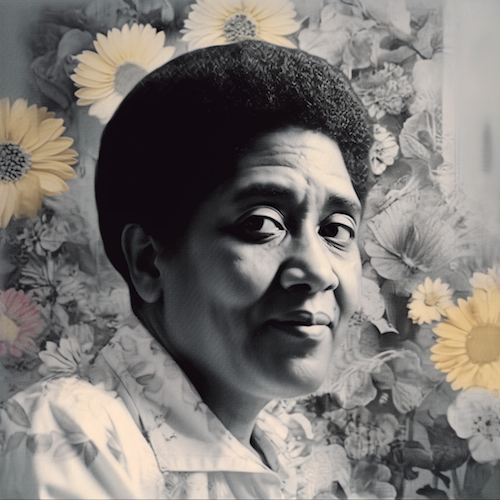
Audre Lorde was an American writer, professor, philosopher, intersectional feminist, poet and civil rights activist. She was a self-described "black, lesbian, feminist, socialist, mother, warrior, poet." Her career spans over two decades with dozens of writings and at least 18 published books, which set her as a key figure in American feminism.
Early Life
Lorde grew up in Harlem, New York, in a family of Caribbean immigrants. Her father, Frederick Byron Lorde (known as Byron), hailed from Barbados and her mother, Linda Gertrude Belmar Lorde, was Grenadian.
In 1954, Audre Lorde studied in Mexico, affirming her identity as a lesbian and poet. She then graduated from Hunter College in 1959 and earned a master's in library science from Columbia in 1961. Lorde was a writer-in-residence at Tougaloo College in 1968, where she engaged with civil rights issues and honed her poetic craft, leading to her book "Cables to Rage."
Art and Activism
Throughout her life, she faced multiple challenges, including racism, sexism, and homophobia, which deeply influenced her work and activism. As a writer, Audre Lorde was known for her powerful and poignant poetry that explored themes of race, gender, sexuality, and identity. Some of her most notable works include "The First Cities," "Cables to Rage," and "From a Land Where Other People Live." Her writing often challenged societal norms and confronted the issues faced by marginalized communities.
Lorde was a fierce advocate for civil rights, feminism, and LGBTQ+ rights. She believed in intersectionality, the idea that various forms of oppression intersect and must be addressed together. Lorde's activism was not limited to her writing; she was actively involved in social and political movements, speaking out against racism, homophobia, and sexism.
From 1972 to 1987, she lived on Staten Island, and in 1978, she co-founded the Kitchen Table: Women of Color Press, a publishing house dedicated to promoting the works of women of color. This initiative played a crucial role in amplifying the voices of marginalized writers who were often overlooked by mainstream publishing.
Audre Lorde's work and influence extended beyond the United States and was not limited to activism or arts. She traveled widely, speaking at conferences, seminars, and workshops, inspiring activists and intellectuals across the globe.
Berlin
In 1984, Audre Lorde began teaching at the Free University of Berlin, becoming a key figure in Germany's emerging Afro-German movement. She coined the term "Afro-German" and mentored activists like May Ayim. Advocating for change through language over violence, Lorde broadened understanding of intersectionality in Germany. Her poem "East Berlin 1989" expressed concerns about racism and the political changes following the fall of the Berlin Wall. Lorde's influence was documented in the 2012 award-winning film "Audre Lorde: The Berlin Years 1984–1992," which highlighted her previously under-recognized contributions to intersectionality theories.
Personal life
In 1962, Audre Lorde married Edwin Rollins, a white gay attorney. They divorced in 1970 after having two children. She was head librarian at Town School Library from 1966-1968. Lorde had a long-term relationship with Frances Clayton, a white lesbian professor of psychology, from 1968 to 1989. She also had a brief involvement with artist Mildred Thompson. Lorde and her final life partner, Dr. Gloria Joseph, lived in St. Croix from 1986 until Lorde's death. They founded several organizations, including the Che Lumumba School for Truth and the Women's Coalition of St. Croix.
Death
Diagnosed with breast cancer in 1978, Audre Lorde wrote the award-winning "The Cancer Journals" and later battled liver metastasis. She was the subject of the documentary "A Litany for Survival," which highlighted her multifaceted activism. From 1991 until her death in 1992, she served as New York State Poet Laureate, receiving acclaim from then-Governor Mario Cuomo. She also won the 1992 Bill Whitehead Award for Lifetime Achievement, inspiring the creation of the Audre Lorde Award for lesbian poetry in 2001. Lorde passed away at 58 in St. Croix and posthumously took the African name Gamba Adisa, meaning "Warrior: She Who Makes Her Meaning Known."
Influence
Audre Lorde's impact on literature, activism, and feminist thought is significant, and she has influenced a wide range of writers, activists, and scholars. Some notable figures who have been known to be influenced by Audre Lorde include:
- bell hooks (Gloria Jean Watkins): A prominent feminist writer and cultural critic, bell hooks has cited Audre Lorde as a significant influence on her work. Both writers share a commitment to intersectionality and have explored issues related to race, gender, and sexuality.
- Angela Davis: A renowned activist and scholar, Angela Davis has acknowledged the influence of Audre Lorde's ideas on her own activism and writings. Davis and Lorde were both vocal advocates for civil rights and social justice.
- June Jordan: A poet, essayist, and activist, June Jordan admired Lorde's work and shared her dedication to using poetry as a tool for activism and social change.
- Barbara Smith: An influential feminist, scholar, and co-founder of the Combahee River Collective, Barbara Smith was inspired by Audre Lorde's writings and advocacy. The Combahee River Collective was a black feminist organization that highlighted the intersections of race, gender, and class.
- Gloria Steinem: The renowned feminist activist and writer Gloria Steinem acknowledged Audre Lorde's influence on feminist theory and activism, particularly in terms of intersectionality and the importance of diverse voices in the feminist movement.
- Adrienne Rich: Another celebrated poet and essayist, Adrienne Rich, admired Audre Lorde's work and her contributions to feminist literature. Rich and Lorde shared a commitment to addressing social and political issues through poetry.
- Cherríe Moraga: A Chicana writer, playwright, and activist, Cherríe Moraga was influenced by Lorde's intersectional approach to feminism and her exploration of identity and cultural heritage.
Legacy
Throughout her life, Audre Lorde received numerous awards and honors for her contributions to literature and activism. Her legacy continues to inspire and empower people from all walks of life to confront injustice, embrace diversity, and find strength in their own unique identities. She remains an icon of resistance and a beacon of hope for marginalized communities worldwide.
Audre Lorde's Books
- The First Cities. New York City: Poets Press. 1968. OCLC 12420176.
- Cables to Rage. London: Paul Breman. 1970. OCLC 18047271.
- From a Land Where Other People Live. Detroit: Broadside Press. 1973. ISBN 978-0-910296-97-7.
- New York Head Shop and Museum. Detroit: Broadside Press. 1974. ISBN 978-0-910296-34-2.
- Coal. New York: W. W. Norton Publishing. 1976. ISBN 978-0-393-04446-1.
- Between Our Selves. Point Reyes, California: Eidolon Editions. 1976. OCLC 2976713.
- Hanging Fire. 1978.
- The Black Unicorn. New York: W. W. Norton Publishing. 1978. ISBN 978-0-393-31237-9.
- The Cancer Journals. San Francisco: Aunt Lute Books. 1980. ISBN 978-1-879960-73-2.
- Uses of the Erotic: the erotic as power. Tucson, Arizona: Kore Press. 1981. ISBN 978-1-888553-10-9.
- Chosen Poems: Old and New. New York: W. W. Norton Publishing. 1982. ISBN 978-0-393-30017-8.
- Zami: A New Spelling of My Name. Trumansburg, New York: The Crossing Press. 1983. ISBN 978-0-89594-122-0.
- Sister Outsider: Essays and Speeches. Trumansburg, New York: The Crossing Press. 1984. ISBN 978-0-89594-141-1. (reissued 2007)
- Our Dead Behind Us. New York: W. W. Norton Publishing. 1986. ISBN 978-0-393-30327-8.
- A Burst of Light. Ithaca, New York: Firebrand Books. 1988. ISBN 978-0-932379-39-9.
- The Marvelous Arithmetics of Distance. New York: W. W. Norton Publishing. 1993. ISBN 978-0-393-03513-1.
- I Am Your Sister: Collected and Unpublished Writings of Audre Lorde. Oxford New York: Oxford University Press. 2009. ISBN 978-0-19-534148-5.
- Your Silence Will Not Protect You : Essays and Poems. Silver Press. 2017. ISBN 9780995716223.
Sources:
https://www.enotes.com/topics/audre-lorde
https://www.poetryfoundation.org/poets/audre-lorde
https://en.wikipedia.org/wiki/Audre_Lorde
https://archive.org/details/warriorpoetbiogr00deve/page/14/mode/2up