 Womenpedia
Marie Curie: The First Woman to Win a Nobel Prize
Introduction
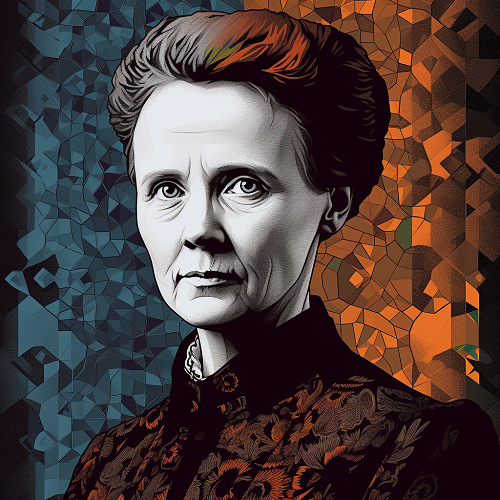
Marie Curie, born Maria Skłodowska, was a remarkable scientist, researcher, and is considered one of the most important scientists of the 20th century. Her groundbreaking work in radioactivity laid the foundation for modern physics and chemistry. Even today, her contributions continue to shape scientific advancements, making her an enduring and influential figure in history.
She became the first woman to win a Nobel Prize; the first person to win the Nobel Prize twice (Physics in 1903 and Chemistry in 1911); and the only person to win the Nobel Prize in two scientific fields. She was also the first woman to become a professor at the University of Paris. Her husband, Pierre Curie, was a co-winner of her first Nobel Prize, and in 1935 her daughter Irène Joliot-Curie was awarded the Nobel Prize in Chemistry.
Early Life and Education
Marie Curie's early life was marked by tragedy and hardship. She was born in Warsaw, Poland, in 1867, the fifth and youngest child of well-educated parents. Her mother, Bronisława, was a teacher and her father, Władysław, was a professor of physics and mathematics.
When Marie was 10 years old, her mother died of tuberculosis. A few years later, her sister Zofia also died of tuberculosis. These early deaths had a profound impact on Marie and made her determined to become a doctor to help others.
In 1883, Marie entered the University of Warsaw, but she was not allowed to enroll in the physics or chemistry departments because she was a woman. She instead studied mathematics and physics at the Flying University, a secret university for women in Warsaw.
In 1891, Marie moved to Paris to continue her studies at the Sorbonne University. She worked hard to overcome the language barrier and the discrimination she faced as a woman in science. She graduated with a degree in physics in 1893 and a degree in mathematics in 1894.
Pioneering Research in Radioactivity
Discovering Polonium and Radium
Marie Curie's scientific journey took a momentous turn when she met Pierre Curie, a fellow physicist and her future husband. Together, they embarked on groundbreaking research in radioactivity. In 1898, Marie and Pierre discovered two new elements: polonium and radium. This extraordinary achievement revolutionized the scientific community's understanding of atomic structure and radioactive decay.
Revolutionary Contributions to Physics and Chemistry
Marie Curie's relentless pursuit of knowledge and commitment to her work resulted in numerous significant contributions. She formulated the theory of radioactivity, challenging established beliefs and paving the way for future advancements. Curie's research on radiation's effects led to the development of life-saving techniques in medical diagnostics and treatments.
Inspiring Future Generations
Breaking Barriers for Women in Science
Marie Curie's achievements extended beyond scientific breakthroughs. As a woman in a male-dominated field, she defied societal norms and shattered glass ceilings. Curie's accomplishments opened doors for countless women aspiring to pursue careers in science, inspiring future generations to challenge the status quo.
- She discovered polonium and radium, two new elements. These elements were the first radioactive elements to be discovered, and they revolutionized our understanding of the atom.
- She developed methods for isolating and purifying radioactive materials. This work made it possible to study radioactivity in more detail, and it led to the development of new medical treatments using radiation.
- She founded the Radium Institute in Paris, which became a world-renowned center for research on radioactivity. The Radium Institute trained many of the leading scientists of the 20th century, and it played a major role in the development of nuclear physics and chemistry.
- She was a role model for women in science. Curie was the first woman to win a Nobel Prize, and her success helped to pave the way for other women to pursue careers in science.
Examples of how Curie's work has influenced science:
- Radiotherapy. Curie's work on radioactivity led to the development of radiotherapy, which is a cancer treatment that uses radiation to kill cancer cells. Radiotherapy is now one of the most common treatments for cancer, and it has saved millions of lives.
- Nuclear power. Curie's work on radioactivity also led to the development of nuclear power. Nuclear power plants generate electricity by splitting atoms of uranium, which releases heat that is used to create steam. Steam then drives turbines to generate electricity. Nuclear power is a controversial source of energy, but it is also a clean and efficient way to generate electricity.
- Medical imaging. Curie's work on radioactivity also led to the development of medical imaging techniques such as X-rays and PET scans. X-rays are used to see inside the body, and PET scans can be used to see how the body is using glucose. Medical imaging techniques have helped doctors to diagnose and treat diseases more effectively.
Curie's work has had a profound impact on our understanding of the world, and it continues to influence science today. She is a true pioneer in science, and she is an inspiration to scientists around the world.
Legacy of Excellence
Marie Curie's dedication and passion for her work continue to inspire scientists, researchers, and individuals worldwide. Her unwavering pursuit of knowledge, coupled with her selflessness, serves as a beacon of hope and resilience. Curie's legacy lives on through the Marie Curie Foundation, which supports scientific research and the advancement of women in science.
Conclusion
Marie Curie's indomitable spirit, groundbreaking research, and unwavering commitment to science have left an indelible mark on the world. Her contributions to the field of radioactivity and her role as a trailblazer for women in science continue to inspire and empower generations to strive for excellence. Marie Curie's legacy reminds us that with determination, passion, and resilience, we can overcome barriers and make profound contributions to society.
Frequently Asked Questions (FAQs)
1. What were Marie Curie's major accomplishments?
Marie Curie's major accomplishments include the discovery of polonium and radium, formulating the theory of radioactivity, and her pioneering research in the field of physics and chemistry. She was the first woman to win a Nobel Prize and the only person to win Nobel Prizes in two different scientific disciplines.
2. How did Marie Curie contribute to scientific advancements?
Marie Curie's contributions to scientific advancements were multifaceted. Her discoveries in radioactivity revolutionized our understanding of atomic structure and led to significant developments in medical diagnostics and treatments. She also laid the foundation for future research in nuclear physics and chemistry.
3. What impact did Marie Curie have on women in science?
Marie Curie's achievements broke barriers for women in science. She became an inspiration and a role model, encouraging countless women to pursue scientific careers. Curie's trailblazing efforts helped pave the way for greater gender equality in academia and scientific research.
4. How did Marie Curie overcome obstacles in her career?
Marie Curie overcame numerous obstacles by persevering in the face of adversity. She faced gender discrimination and limited resources but remained committed to her research. Curie's determination, resilience, and passion for knowledge propelled her forward, allowing her to make groundbreaking discoveries.
5. What is the Marie Curie Foundation?
The Marie Curie Foundation is an organization dedicated to promoting scientific research and the advancement of women in science. It supports projects and initiatives that carry on Marie Curie's legacy, fostering excellence and gender equality in the field of scientific exploration.
6. What is Marie Curie's lasting legacy?
Marie Curie's lasting legacy lies in her scientific achievements and her role as an inspiration for future generations. Her discoveries continue to shape modern science, and her advocacy for women's participation in scientific fields has had a profound impact on gender equality in academia and research.
7. How did Marie Curie's work impact medical science?
Marie Curie's work had a significant impact on medical science. Her research on radioactivity led to the development of techniques such as X-rays, which are essential in medical diagnostics. Additionally, her work with radiation therapy has contributed to advancements in cancer treatment.
8. How can we honor Marie Curie's memory today?
We can honor Marie Curie's memory by continuing to support scientific research, especially in fields related to radioactivity and nuclear physics. Furthermore, promoting and encouraging women's participation in science and providing equal opportunities can help carry forward her legacy of excellence and gender equality.
Curious facts about Marie Curie
- She was a child prodigy who could read and write in French and Russian by the age of 4.
- She was turned down for a job at the University of Warsaw because she was a woman.
- She and her husband, Pierre Curie, named the element polonium after her native Poland.
- She was the first woman to become a professor at the University of Paris.
- She developed mobile radiology units that were used to X-ray wounded soldiers during World War I.
- She died of aplastic anemia, which is a type of blood cancer that is caused by exposure to radiation.
- Her daughter, Irene Joliot-Curie, also won a Nobel Prize in chemistry.
Sources: