 Womenpedia
Conceição Evaristo: Voice and Resistance in Afro-Brazilian Literature
By Ana Beatriz Marin
Introduction
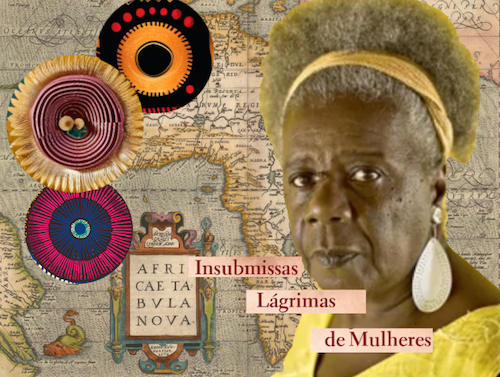
Renowned Brazilian writer, Maria da Conceição Evaristo de Brito was born in Belo Horizonte, Minas Gerais, on November 29, 1946. She is the second of nine siblings – children of the domestic worker Joana Josefina Evaristo and the bricklayer Antônio Evaristo –, who grew up amidst the poverty of the Pendura Saia slum. This family universe, also composed of aunts who worked as cooks and cleaners, permeates her entire work. Her books are marked by the fusion of personal memories, collective experiences, a critical look at the marginalization of women and the black community, and ancestry. She is also recognized for her role as a social activist, promoting debates on racial and gender equality and access to education.
Beginnings
Conceição Evaristo's interest in literature began in childhood. Her mother, despite being illiterate, collected books and magazines and showed them to her children. Together, they looked at the pictures and invented new plots, carrying forward a heritage of African storytelling cultures. Concurrently, at 12, she started working as a domestic worker to help her family. At 16, she entered the Minas Gerais Education Institute, where she graduated in Literature in 1971.
After graduating, she began working as a teacher in Rio de Janeiro's public school system, teaching Portuguese, Literature, and Composition for over 30 years. During this period, she started writing her first poems and stories. Her texts were first published in the 1990s in the "Cadernos Negros" series, a literary publication that values Afro-Brazilian literature.
Recognition
The publication of the novel “Ponciá Vicêncio” in 2003 marks the beginning of her notable trajectory in literature. It tells the story of a black woman who is torn from her homeland and brought to Brazil as a slave. She is also the author of, among others, “Becos da Memória”, “Insubmissas Lágrimas de Mulheres”, “Histórias de Leves Enganos e Parecenças”, “Poemas da recordação e outros movimentos”, and “Olhos d’água”, a collection of stories for which she won the Jabuti Literature Prize in the Novel category in 2015. The texts tell stories of black women living on the outskirts of Rio de Janeiro and address themes such as poverty, gender violence, the search for identity, and the resistance of the black people.
In 2018, the writer ran for a seat in the Brazilian Academy of Letters (ABL). Despite receiving only one vote – the elected was filmmaker Cacá Diegues, with 22 – her candidacy represented a milestone in the history of the institution. Conceição Evaristo was the first black woman to compete for a seat in the ABL. Asked if she would run again, she said: “Personally, I have no such desire because I think it could be a waste of time. If last time I won one vote, now, maybe I would get two. I like to affirm without modesty that who lost was not Conceição Evaristo, it was the Academy, which failed to write in the History of the institution a great moment. They also lost with the non-election of Daniel Munduruku,” she stated.
In 2023, she won the Juca Pato award for “Intellectual of the Year”, granted by the Brazilian Union of Writers, becoming the first black woman to receive it. Created in 1962 by writer Marcos Rey, the trophy is one of the most traditional in Brazil. Personalities such as Frei Betto, Lygia Fagundes Telles, Carlos Drummond de Andrade, Antonio Candido, Dalmo Dallari, Milton Hatoum, Ignácio de Loyola Brandão, and Aílton Krenak, among others, are some of the names that have received the award, which is based on democracy and resistance.
Activism
Because of her work and activism, Conceição Evaristo has become a reference for young black authors. For her, activism is intimately linked to the collective. “I am shaped by a commitment to my surroundings,” she says. In the mid-1980s, for example, along with a collective of black writers, she presented her works in public schools, prisons, and residents' associations. “Being in the collective is a state that formed me. I never enter into conflict (with literature). My text also comes from that collective word,” she says.
In 2016, she criticized the organization of Brazil's largest literary fair, the Paraty International Literary Festival (Flip), upon noticing the absence of black authors. “We are reading an incomplete nation,” she commented at the time. Because of this, the following year, the festival honored the writer Lima Barreto and increased the participation of black writers in the program of this and subsequent events.
About the author:
Ana Beatriz Marin is a multimedia journalist with over 30 years of experience in various media: web, television, magazines, newspapers, and radio. In Rio de Janeiro (Brazil), she has worked at the newspapers O Globo, Extra, and O Dia as a reporter, writer, and editor. In 2021, she was the coordinator and executive producer of an audiovisual project for Snapchat (Snap Group Limited) through the Spanish production company Bad Cat Company. She lived for seven and a half years in Barcelona. In the Catalan capital, she worked at the newspaper La Vanguardia as a writer and content producer in text and video. She also worked at the Telecinco television network doing press reviews; was a translator for the European Commission, and collaborated as a writer for the Catalan daily L'Avui.